Group Residency Programme Italy
Place, People and Time: WRITING with PLACE
Thurs 01 Oct – Thurs 08 Oct 2026
/ 7 nights, 8 days
APPLY NOW / Application deadline Fri 01 May 2026
The Museum of Loss and Renewal is delighted to invite applications for the Group Residency WRITING with PLACE, Italy.
This Group Residency has been devised by Tracy Mackenna (she/her), artist, educator and curator of The Museum of Loss and Renewal in partnership with writer Elizabeth K Reeder and writer and artist Amanda Thomson.
WRITING with PLACE will be led by Tracy, Elizabeth and Amanda who share a passion for writing, and the design, production, publishing and dissemination of printed matter and digital publications. Between us we activate diverse skills and expertise when we employ text, language, writing, publishing and performative modes of working to investigate place(making), (un)belonging, loss, renewal, memory, (personal)narratives and imaginary futures.
We welcome applications from people working in creative practices, research, writing, poetry, performance, scenography, education etc. and for those who have a strong interest in ‘writing’ as an area of practice. The group will comprise of approx. eight participants.
‘Writing’ is understood as creative and critical, and situated writing as an area of practice in its most expanded sense. In other words, writing that is experimental, inventive in its form, and responds to place.
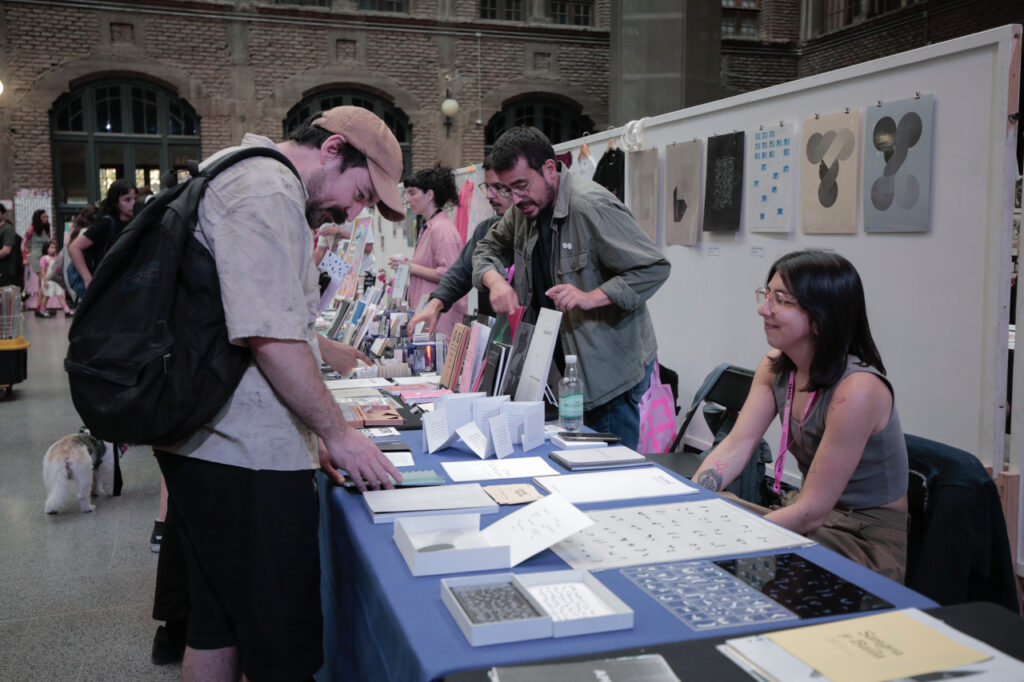
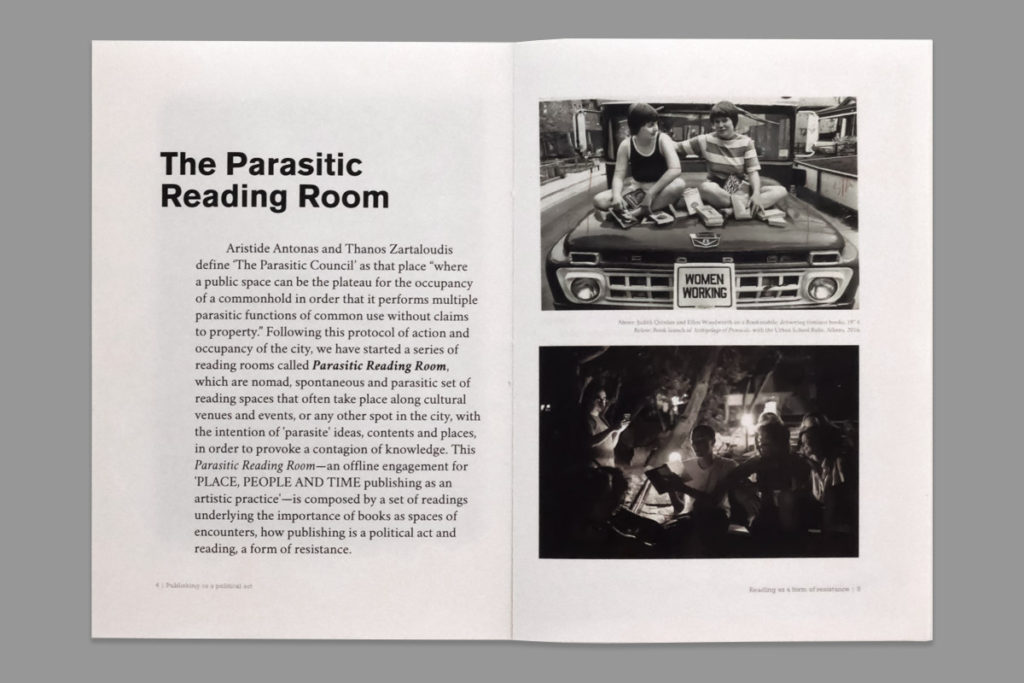
Have a look at WRITING into PLACE, the recent publication by The Museum of Loss and Renewal and PUBLICAR.


Focal Points
- Writing in an expanded sense
- Immersive experience
- Semi-structured programme
- Co-learning
- Individual practice
- Slow time and slow processing
- Collective platform for encounters
- Expert facilitators and programme contributors
- Supportive, caring, non-hierarchical environment
- Interdisciplinarity
- Technologies
- Books, Readings
- Experimentation and play
- Location specific, including pre-Roman and Roman sites
- Imagining Futures
- Cultural and environmental ecologies
- Memory, loss, renewal
- Fully catered


Aim
The aim of the Group Residency is to develop ‘writing’ and approaches to ‘writing’ that are experimental, inventive in their form, and that respond to place, in a specific environment. Bringing together residents from a range of areas of practice and research, the potential to create an international network is made possible.
The Group Residency provides opportunities for approx. eight creative practitioners and researchers to share and establish a bank of knowledge and creative strategies, both globally interconnected and hyper local, digital and analogue, for imagining new responses to places and the multiple, layered and contested histories they hold.
Ways of Working
A range of ways of working will be invoked and provoked while residents are also encouraged to share and develop their own practices. Participants will investigate, share and connect their experiences of ‘writing’ in their own place in the world with those of fellow residents through facilitated co-creating and co-presenting modes. By listening, looking and doing, residents will activate writing while investigating sites.
Residents will work collectively and individually. Value will be given to the individual knowledge and experience of each resident, exploring the act of writing as a fundamental means to analyse, document, record and translate the worlds we inhabit. Over shared meals, residents and facilitators will expand the time for exchange and developing relationships and networks.
Elizabeth says: ”Writing is action, reflection, experience. Writing is gained and gaining knowledge and is an active interplay between energies and focuses. It is rarely linear and we rarely write exactly what we set out to write. Sustainable creative practice comes from and nurtures freedom and risk and close attention to detail that is matched by a built knowledge of creative-critical engagement about form. Building an active, imagined, contextualised engagement with our own processes and work is essential.
In terms of a residency or period of gathering this practice may include writing within and with place, exploring different modes and mediums, seeking knowledges across spectrums and disciplines, and figuring how to build the work you feel/hear/see as you’re making. In terms of Writing with Place we will be exploring: generative writing practices; learning as a driver (how we each carry our own interests with us here and then seek out and incorporate or are guided by new sources and resources); variations in attention or paths of attention; emotions of place; flora; uneven/spiky/dynamic engagement (across time); variations in form/structures/archival practices; creative-critical engagement – finding form, making editorial interventions/ engagements/ changes, particularly for non-traditional approaches across-medium work; types of rest (in place) and fieldwork including non-feral/non-peak/non-achievement engagement; slow time and slow processing and fatigue/chronic illness and their impact on longer projects; experimentation in process, form, structure, language.
A favourite anchor for process and travel is Anne Carson: ‘I packed my rucksack with socks, canteen, pencils, three empty notebooks. I took no maps. I cannot read maps – why press a seal on running water? After all, the only rule of travel is, Don’t come back the way you went. Come a new way.’ (p. 123, Introduction to the Anthropology of Water)”.
Amanda will guide us through consideration of ”What is it to be in place, or to be out of place? In this residency week, we will consider what it means to listen to a site and its natural environment and human history, thinking about site-specificity and site-responsiveness and what it is to bring our own histories, interests and experiences to bear on the work we produce.
We’ll explore the implications of Mary Oliver’s assertions that ‘one tree is like another, but not too much’ and ‘attention is the beginning of devotion’ while considering landscapes as sites of encounter and imagination, places that can be met critically, lyrically and with open-ended but respectful curiosity and speculation. What are the significances of human and more-than-human micro and macro-mobilities and migrations and the knowledge we gain through our own movements and walking as well as stillness? If we see places as multi-layered, multi-sensorial, contested and complex in relation to their different social and ecological histories what are the questions that arise, and the ways we might choose to respond to them?”.
Residents and facilitators will come together to undertake exercises in slow-looking, deep listening, repeated movements, experimenting with what it means to transpose, transcribe, invent, conflate while sifting through the multiple histories and geographies of carefully chosen locations in and around the village of Collemacchia.
Guided walks and readings will happen in selected locations that evidence occupation, abandonment, and renewal: delicate places in the group residency’s environment, triggers for imagining and inventing new futures and histories. Members of Collemacchia’s creative and research communities who hold precious knowledge of local history past and present, will contribute to bespoke sessions.
FACILITATORS
Facilitators
TRACY MACKENNA (she/her)
Tracy Mackenna (Prof Emerita; SCO-IT) is an artist and the Curator of The Museum of Loss and Renewal and The Museum of Loss and Renewal Publishing. Her specialist areas are contemporary art practice, artistic research, art writing, collaborative practices, mentoring, publishing as an artistic practice, and art education.
The themes of loss and renewal run through her work, investigated through durational engagement with people, place and time, focussing on identity, belonging, memory and imagining new sustainable and accessible futures. She explores and makes with collaborators and partners, integrating art, co-learning and society.
Exhibition projects and publications have been commissioned by e.g. CCA Glasgow, Barbican Art Gallery London, Migros Museum für Gegenwartskunst Zürich, Scottish National Portrait Gallery, P3 Art and Environment Tokyo, Stedelijk Museum Schiedam the Netherlands.
ELIZABETH K REEDER
Elizabeth is author of microbursts (her lyric essays, and a design collaboration with Amanda Thomson), An Archive of Happiness and Ramshackle (novels). She’s fascinated by the mess of the creative process, the expanded form of essay, and by archives (especially difficult, imagined, elusive archives). Other subjects she explores are identity, family, commonplaces, technological and imagined futures, narrative structure and many others. She teaches creative writing at the University of Glasgow and Moniack Mhor, Scotland’s creative writing centre. She is a MacDowell fellow.
Elizabeth co-runs DeathWrites a network of Scottish based writers writing into illness, dying, death and grief. Her interest in the essay (in particular in experimental, hybrid forms) has developed from a desire to write so that language, form and structure embed knowledge in a way that can be read like poetry and art with a high level of complexity, intentional multiplicity and imagined possibilities. https://elizabethkreeder.com/
AMANDA THOMSON
Amanda is a Scottish writer and visual artist whose work often begins in the natural world, investigating places as active, multi-sensorial, multi-layered and experiential fields of investigation. It variously concerns questions of attentiveness and care, interrelated with considerations of home and belonging, migrations and mapping, history, empire and post-colonialism in how places come to be made. She uses creative non-fiction, print, artists books, photography, film and sound in her investigations.
Amanda’s first book, A Scots Dictionary of Nature, is a compendium of old Scots words about nature found in 19th Century Scots Language dictionaries. Belonging: Natural Histories of Place, Identity and Home is a mixture of family history, nature writing and reflections on art, racism, colonialism and the climate crisis, and was shortlisted for the Wainwright Prize for Nature Writing, 2023. Writing in anthologies include Who will be remembered here, essays on queer spaces in Scotland. Visual arts practice has been shown at e.g. CCA in Glasgow, The Royal Botanic Garden’s Inverleith House, Edinburgh and the Venice Architecture Biennale. She is a lecturer in the Painting and Printmaking Department at The Glasgow School of Art. www.passingplace.com
Facilities
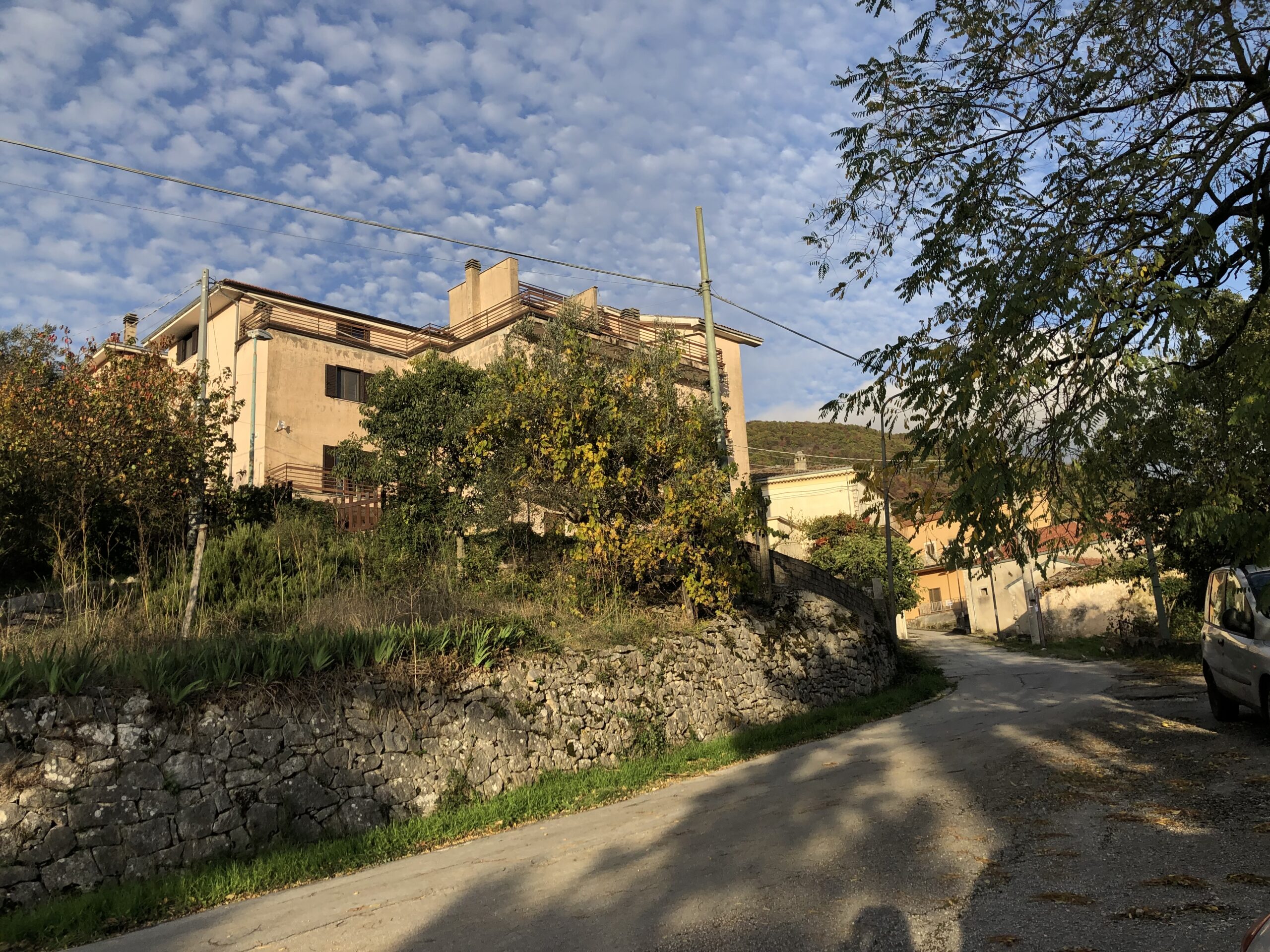
Accommodation / Residents are accommodated in two recently renovated, comfortable houses situated a couple of minutes walk from each other. Houses have fully equipped kitchens, bathrooms, sitting rooms. Single use bedrooms can be allocated dependent on accessibility requirements. Central heating and internet throughout. Cleaning is included in cost.
Studios / Workspaces are located in buildings that are situated a couple of minutes walk from each other, and from accommodation. They are recently renovated and include indoor and outdoor making spaces, and desk space. Internet throughout.

Fee
The Residency Programme is operated on a non-commercial cost-covering basis, and is financially supported by The Museum of Loss and Renewal in order to keep fees low. The residency fee is €1750 (Euro) paid by the resident. It includes the residency programme, accommodation, full board, collection/return to nearest train/bus station, accommodation in a variety of spacious rooms, excellent studio spaces. Single bedrooms are allocated dependent on access needs. Catering (3 meals each day) includes ingredients that are mainly locally sourced and meals prepared by our cook. Vegan and vegetarian diets can be catered for.
A deposit of 50% is payable within three weeks of being offered a place on the residency programme (non-refundable). The remaining balance is payable eight weeks in advance of the residency start date. In the event that cancellation is required, residents may cancel up to a minimum of six weeks prior to their residency start date. If a resident has to end the residency early due to personal circumstances, a refund cannot not be issued.
You will be responsible for funding and organising your own travel, your own insurances and any visa requirements particular to your country of origin. Detailed travel information will be supplied (closest airports Naples, Rome), and collection/drop-off at a local train station will be arranged.
We do not have external funding for this project, so regret that we are unable to offer assistance with fees, flights, production costs or other subsistence. Typically, successful applicants source funding by applying to their national arts funding bodies, personal fundraising, or through academic institutional support. Formal letters of invitation can be provided to assist in this process.
Schedule Outline
Day 01
Arrival (transport from Venafro to Collemacchia), orientation, introductions, dinner, readings
Days 02-07
- Subject-specific sessions by facilitators
- Presentations and exercises by facilitators/programme contributors
- Collective and individual (mentored) working sessions
- Working sessions in the local environment
- Readings of theories and texts
- Catered discursive meals
- Collective critical evaluation and forecasting
Day 08
Departure (transport from Collemacchia to Venafro)
A detailed programme with dates and times will be provided to residents before arrival.
Eligibility
- You can be at any stage of your (creative) career
- The programme may best suit (creative) practitioners who are seeking to develop their knowledge and skills within an environment of learning and discussion
- More experienced applicants are very welcome to apply
- Open to (creative) practitioners based in any country but applicants should have a good working knowledge of English
- Applications from duos and partnerships are welcomed